Erythranthe minor
(Colorado Monkeyflower)

Erythranthe minor, Blue Lakes Trail, Ouray Co. 8732

Erythranthe minor, Blue Lakes Trail, Ouray Co. 8735
| Scientific Name | Erythranthe minor (Mimulus minor, Mimulus tilingii var. tilingii) | USDA PLANTS Symbol | MITIT |
| Common Name | Colorado Monkeyflower | ITIS Taxonomic Serial No. | N/A |
| Family | Phrymaceae (Lopseed), formerly Scrophulariaceae | SEINet Reference |
Click Here |
| Description |
Life zones and habitat: Subalpine and alpine (10000 to 12000 ft.); wet areas in alpine tundra and along streams, lakesides and in ditches.
Plant: Erect perennial 2 to 8 inches tall; colony forming; branched stems, densely covered with minute hairs that may be gland-tipped. Leaves: Opposite, broadly ovate to elliptic-ovate or lanceolate, 1/3 to 1-inch long and 1/5 to 5/8-inch wide; very short or no petiole; edges are shallowly dentate to denticulate; surfaces are smooth. Inflorescence: Nodding flowers are two-lipped yellow, tubular, about 1/3-inch long; upper lip two-lobed, larger lower lip is 3-lobed with dense, fine hairs on upper surface and no reddish-brown spots. Bloom Period: June to September. References: "Flora of Colorado" by Jennifer Ackerfield and Flora of North America. |
BONAP Distribution Map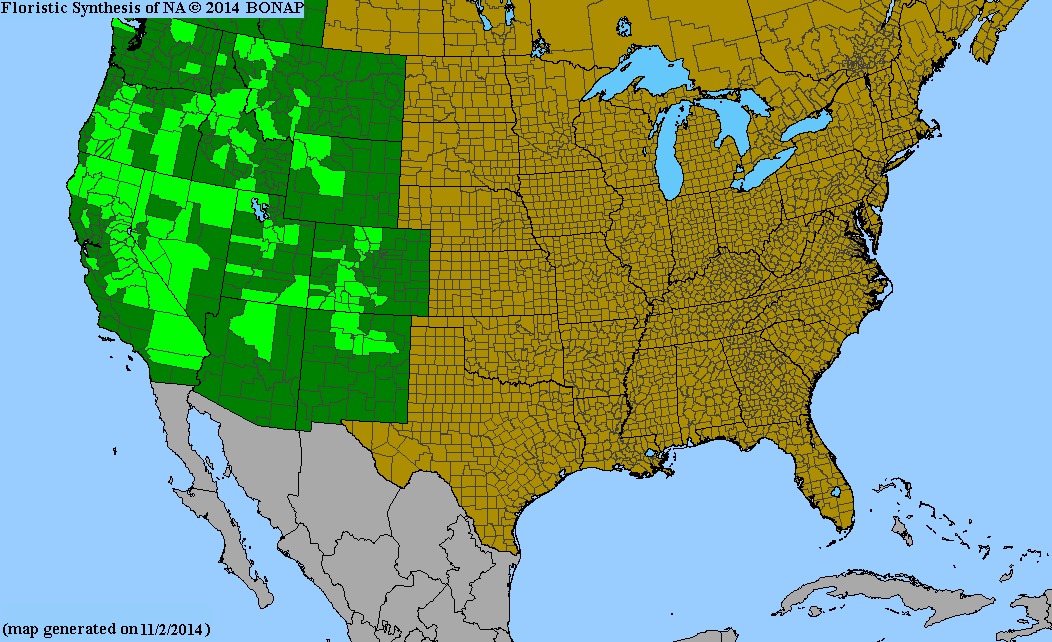 Mimulus tilingii var. tilingii Map Color Key |
Colorado Status: Native |
© Tom Lebsack 2026
Banner photo: Castilleja rhexifolia and a brewing storm over the San Juan Mountains
I try to provide accurate, up-to-date, and relevant information, but cannot guarantee the completeness or accuracy of any information presented on this website. I use authoritative references to insure high standards of accuracy and review and update the information frequently.